Calligraphy had many faces: sign painting, watercolours, brushpens, digital, dip pens- the list goes on! My first love and personal favourite is pointed pen calligraphy (featuring in this post’s cover photo). There are so many questions I asked when I started pointed pen, and I haven’t stopped asking them! What nibs should I use? Which nib holder is best? Which brand of paper? Which ink???
A lot of these decisions are up to personal preference, especially the ink! I tried using watercolours for pointed pen a few years ago, and failed spectacularly. However, having gained more separate pointed pen and watercolour experience, I tried combining them again and it was a success! This post will hopefully save you those few years, and get you using your watercolours for dip pens in no time!

TIP: Prepare your nibs before using them with ink or watercolours. Most nibs come with a protective coat to prevent rusting. This is great for longevity, but prevents ink or paint from sticking to the nib (see photo below for comparison).
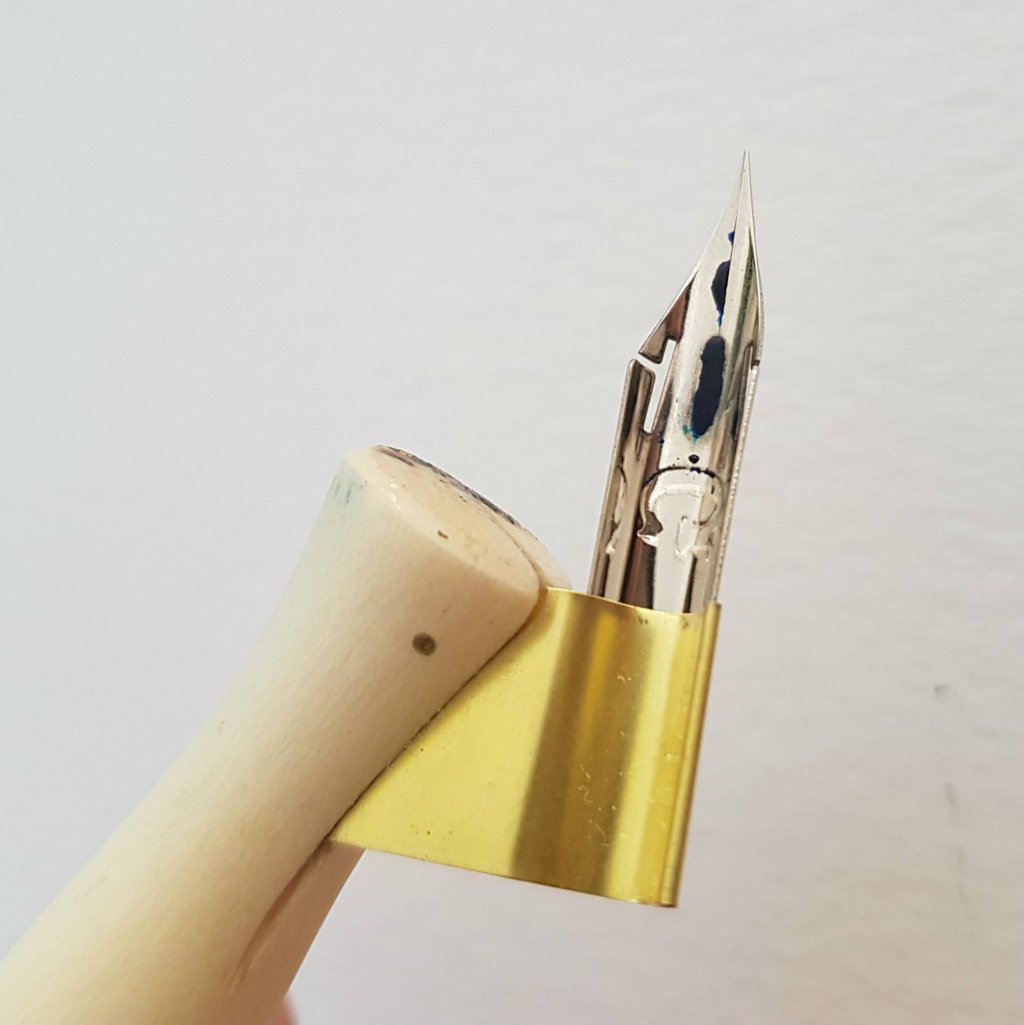
Pre-treatment 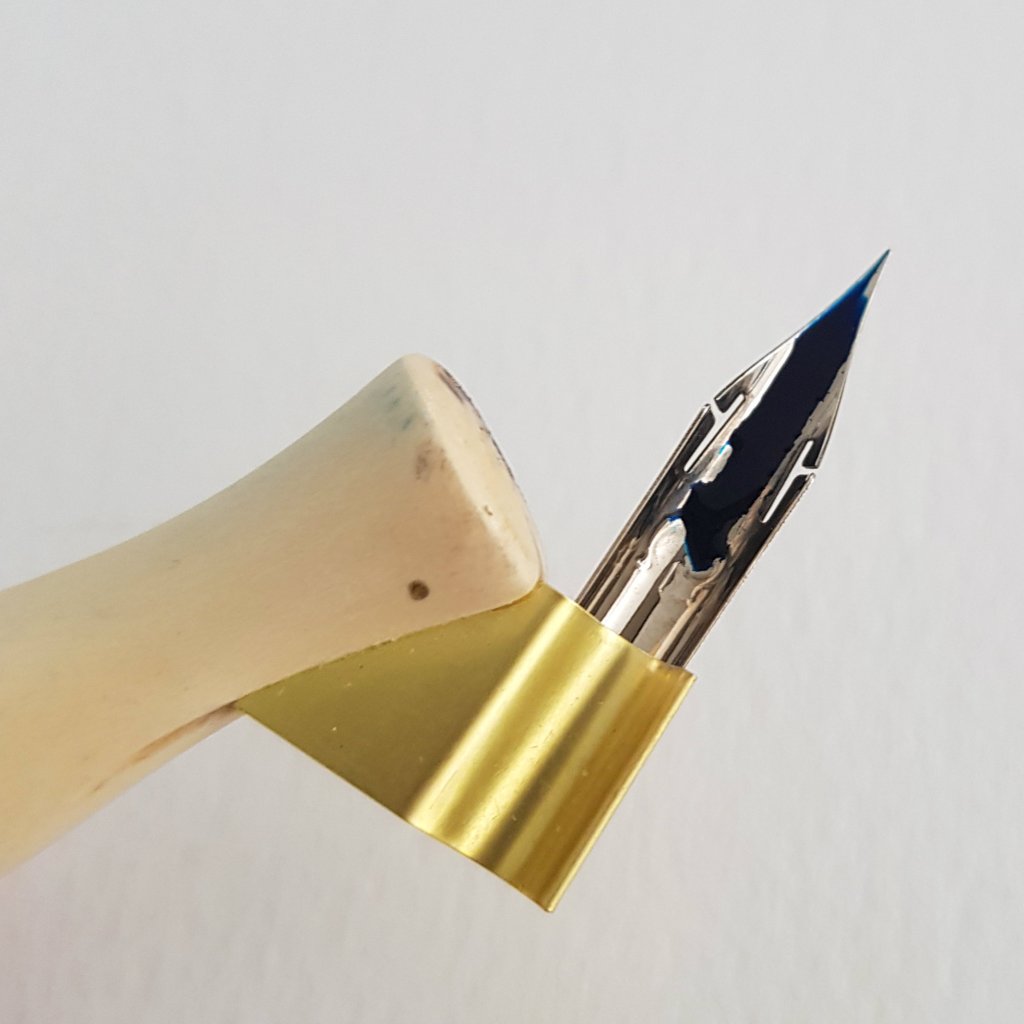
Post-treatment
Preparing Your Nib
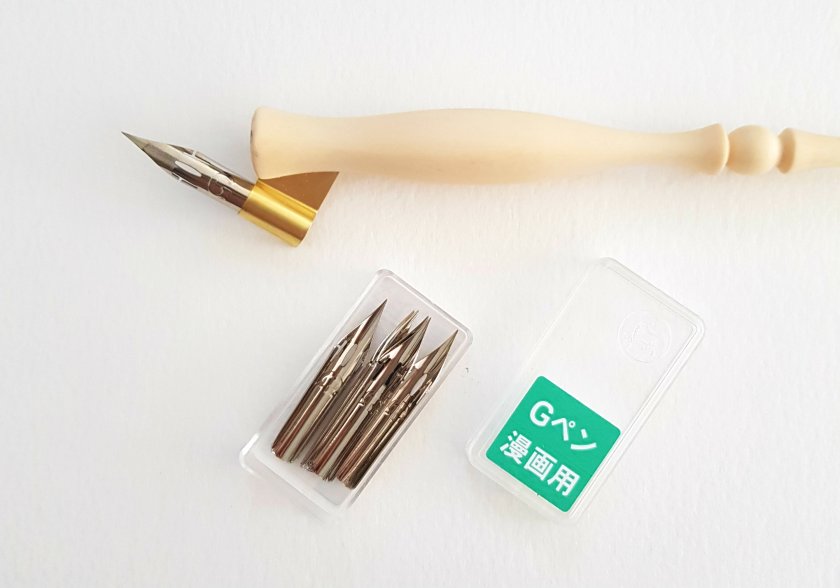
I use Tachikawa G nibs for pointed pen. This method works great with these nibs. To remove the factory coating: place your nib in the nib holder (it will get hot so be careful!) Using a lighter, pass the nib through the flame twice on each side of the nib. Clean off the black residue with a clean tissue. Wait for the nib to cool and its good to use! As always, use caution with lighters and only use them in safe, ventilated places.
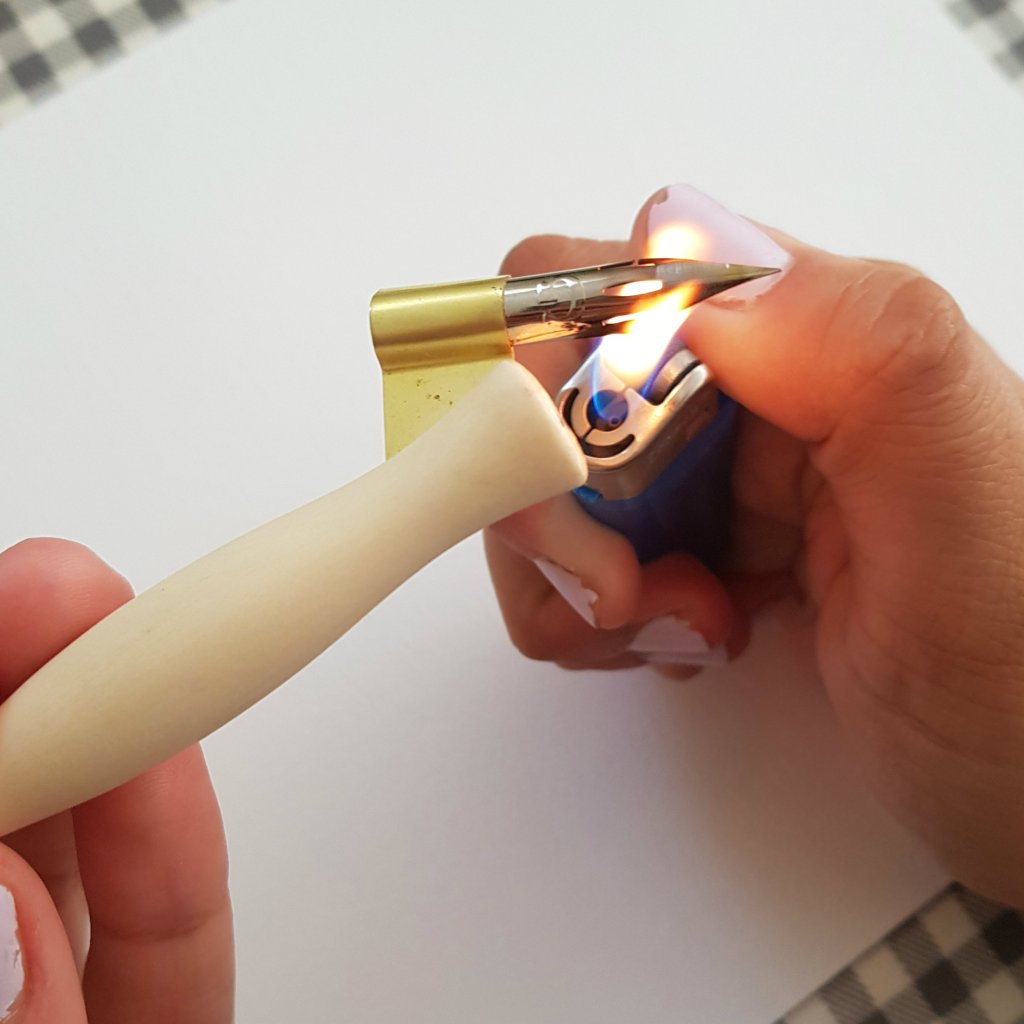
I use Tachikawa G nibs for pointed pen. This method works great with these nibs. To remove the factory coating: place your nib in the nib holder (it will get hot so be careful!) Using a lighter, pass the nib through the flame twice on each side of the nib. Clean off the black residue with a clean tissue. Wait for the nib to cool and its good to use! As always, use caution with lighters and only use them in safe, ventilated places.
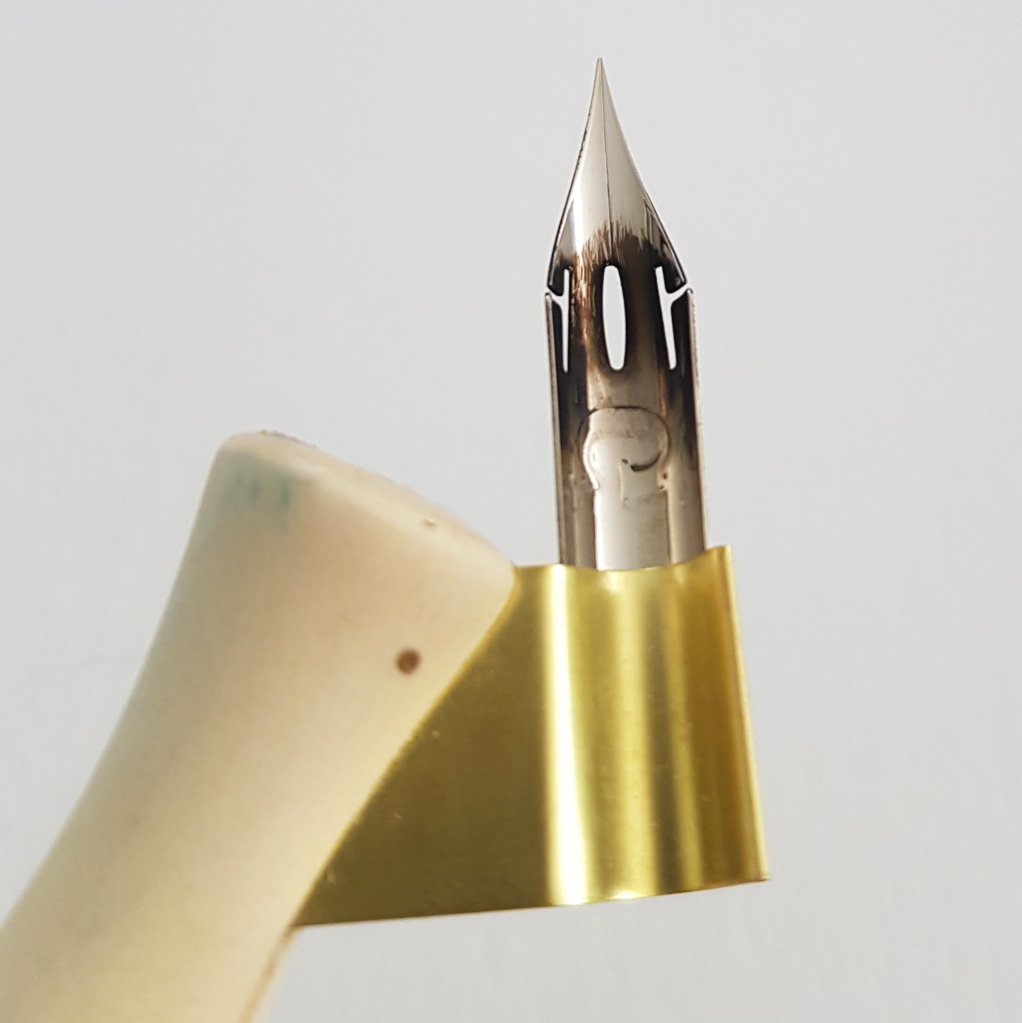
Before cleaning off the residue 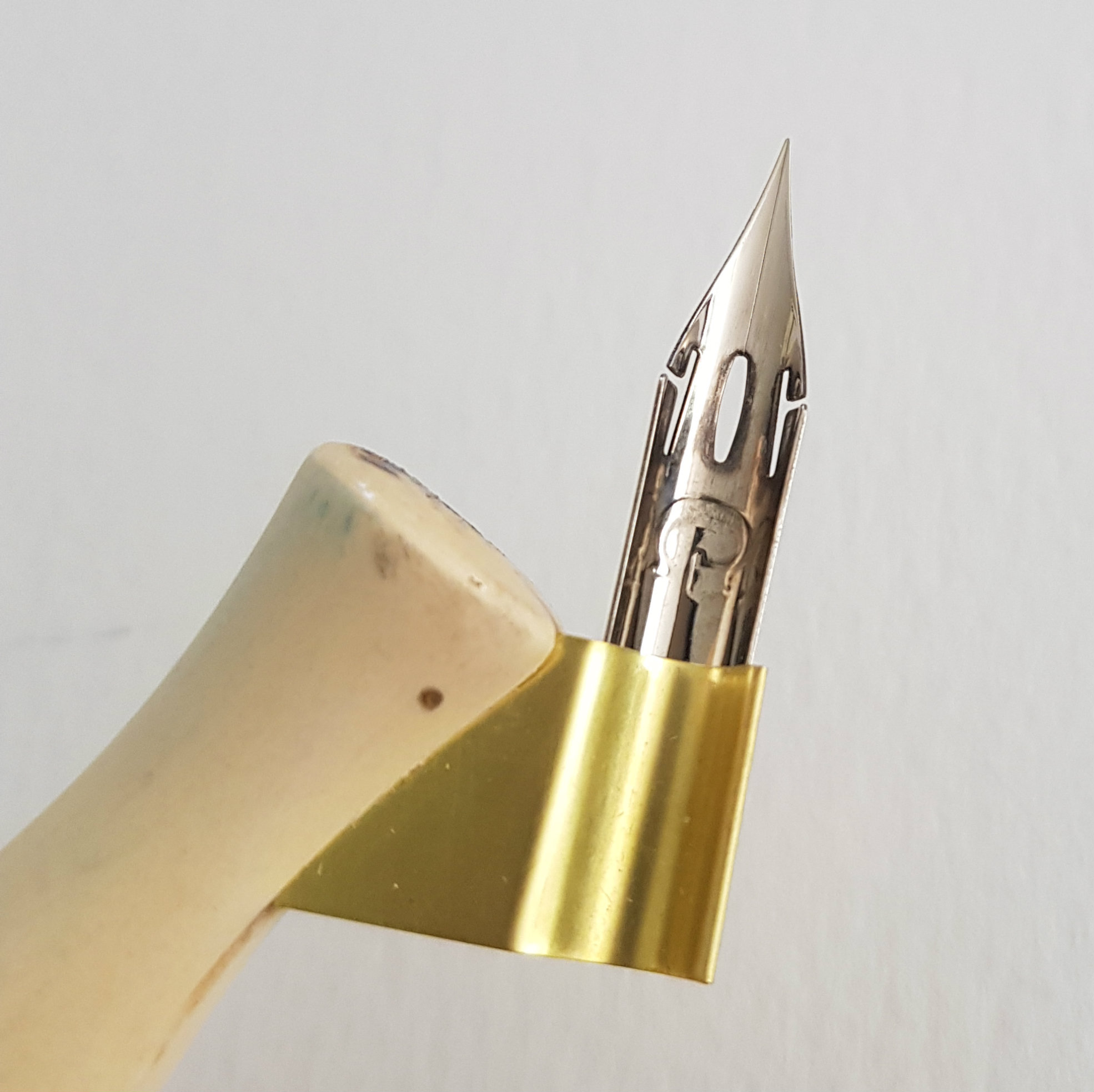
Clean, treated nib- ready to use!
HOWEVER. I do not have any experience using this method with other nibs. If you are using a vintage or expensive nib, please do extensive research into possible coatings and the best ways of approaching them before carrying out any cleaning processes.
Load the Paint
Pre-wet your watercolours using water on a brush or a dropper filled with water to activate them. The key with pointed pen watercolour is thickness of the paint. It needs to be thick enough that it doesn’t blob off of the nib on to you paper; but thin enough that it travels down the tines on to your paper in a controlled fashion. This part is very difficult to instruct in writing, and is largely up to experience. The advantage of using watercolours is that changing the consistency is very easy! A little bit more water will thin your paint, and a little less with thicken it.
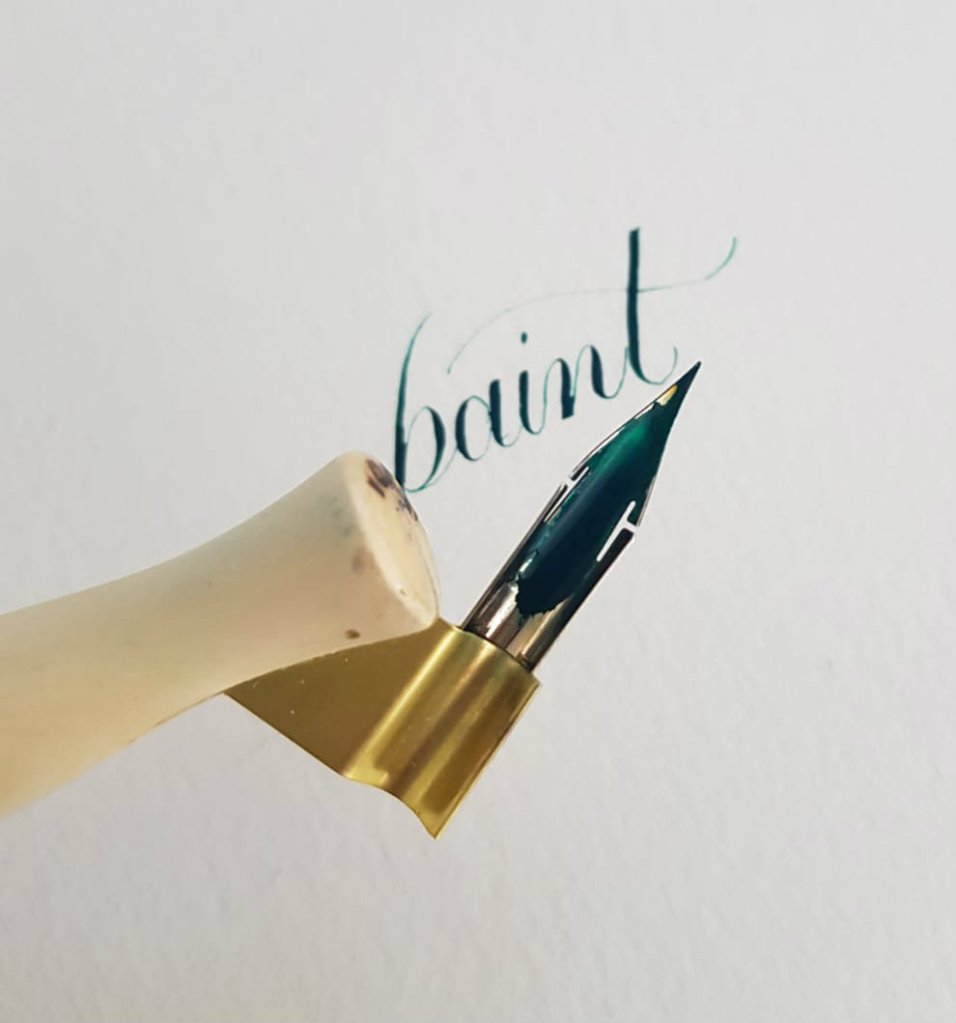
To load your nib, get the consistency you think is right on a brush, and simply brush it on to the underside of the nib, from the vent all the way down the tines, and on to the tip. To test the consistency, flex the nib on some spare paper a few times, and alter the amount of water accordingly!
REMEMBER: If your ink is falling off the nib on to the paper, your ink is too thin. If it refuses to budge from the nib, it’s too thick!

 Marked By Reem